
 Harmony Recovery has been providing addiction healthcare services in Estes Park since 1969. We would like to offer these stories from our alumni to show the humanity, strength, and perseverance of those working to recover from addiction. Often stigmatized and misunderstood by society, people on their path to recovery are managing a chronic illness which is a unique journey for each individual. Here is one such story. – Shane Hudson, CEO, Harmony Recovery
There was a time when I hated waking up.
My life had become unmanageable. I barely slept, constantly moved from one job to another, and spent most of my time hating myself. I felt like I was failing at life, but I didn’t know how to stop. Every day felt like something I needed to survive rather than something I wanted to experience.
Then I started having seizures.
The first happened behind the wheel of my car. Another happened alone in my bed. Then, one day, I could feel another one coming. That was the moment something changed.
I didn’t want to die anymore.
I remember desperately wanting there to be anything else wrong with me. I wanted a brain tumor. I wanted some medical explanation that would make what was happening to me something other than what I already knew it was. I even scheduled a brain scan.
But deep down, I knew. It was my substance use.
For the first time, I was faced with a choice that felt very simple, even though making it was anything but: I could keep going the way I was going, or I could choose to live.
I chose to live.
That decision brought me to Harmony Recovery, where I spent 30 days. For the first time in a long time, I was in a place where I didn’t have to figure everything out on my own. There was structure, support, and a community of people who understood what I was going through. The relationships I built there reminded me that I wasn’t the only person struggling and that there was no shame in needing help. Harmony gave me a safe place to begin the work of recovery and, perhaps most importantly, gave me enough time and support to believe that a different life was possible.
Early recovery was not easy. I felt fragile and uncertain. I needed structure and people around me, and I needed support in ways that I had never allowed myself to need it before. I carried an enormous amount of shame, but underneath that shame was something else: hope.
After Harmony, I continued with intensive outpatient treatment and sober living. I began learning how to live without substances and rebuild parts of my life that I had spent years tearing apart. I had to learn how to sit with uncomfortable feelings instead of running from them, and I had to learn that asking for help was not a weakness. Most importantly, I had to learn how to forgive myself.
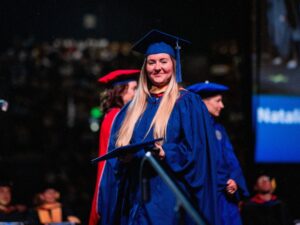
Today, I am more than three years sober. Since getting sober, I have accomplished things I once couldn’t imagine. I completed a master’s degree and became a social worker. I now help people experiencing homelessness and those recovering from substance use disorders.
When I look at my life now, sometimes it is difficult to recognize the person I used to be. I love my life. I love the person I have become. I am proud of what I have accomplished, not because I am perfect, but because I know how hard I fought to get here.
Sobriety has given me my life back. It has given me relationships I can actually be present for. It has given me goals and a future. It has given me the ability to show up for other people. Perhaps most importantly, it has given me the opportunity to use the experiences that once nearly destroyed me to help someone else believe that their story isn’t over.
I get to be there for people who are standing in places where I once stood, and that is something I never could have imagined when I was sitting in the darkness of my addiction.
I think one of the biggest misconceptions about addiction is that people become less worthy of compassion because of the things they do while they are sick. Addiction can make people behave in ways that don’t reflect who they truly are. People make mistakes. They hurt people. They lose jobs, relationships, homes, and pieces of themselves. Sometimes they do things they never thought they were capable of doing.
But they are still people.
People struggling with addiction are not stupid. They are not weak. They are not defined by the worst moments of their lives. They are human beings who are sick and deserve the opportunity to get better. I believe addiction is one of the few illnesses where, through recovery, you can become stronger and more self-aware than you were before you ever became sick.
I don’t look back at the person I was with hatred anymore. I look at her with compassion. She was hurting. She didn’t know how to save herself yet. But eventually, she decided she wanted to live, and that decision changed everything.
More than three years later, I am still choosing life.
I have a master’s degree. I am a social worker. I get to help people who are struggling to find their way back to themselves. I have built a life I am proud of.
I didn’t just survive my addiction. I built a life worth staying sober for, and I am grateful every day that I did.
– Madison S.