
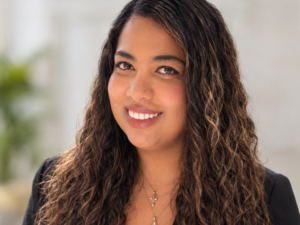
 At Harmony Recovery, meaningful treatment starts with people who understand the complexity of addiction and believe deeply in the possibility of recovery. Ashita Alexander, Clinical Manager, brings that perspective to her work every day.
Ashita oversees Harmony’s programming for women-identifying clients and its Intensive Outpatient Program (IOP). From beginning her career in behavioral health in India to finding her way to Harmony, her passion for challenging stigma and helping people build meaningful lives in recovery has shaped her approach to care.
We sat down with Ashita to learn more about her journey, her approach to treatment, and what she wishes more people understood about addiction and recovery.
Can you introduce yourself and tell us about your role at Harmony Recovery?
I started working in the mental health field in 2012 in India after completing my first graduate program. As I gained experience, I realized how much I loved working in the substance use field, which led me to pursue graduate school at Hazelden Betty Ford in Minnesota.
While I was there, I was offered a position at what was then Harmony Foundation. I started as an evening and weekend counselor, moved into a lead counselor role, and today I serve as Clinical Manager, overseeing our program for women-identifying clients as well as our IOP program.
What inspired you to work in behavioral health and addiction treatment?
Addiction is incredibly misunderstood. I initially thought that misunderstanding was something I was seeing primarily in India, but I have since realized how universal it can be.
There are misconceptions about the effectiveness of self-help groups like 12-Step programs, stigma that clients may carry about themselves, stigma from families, and the idea that substance use is somehow a sign of weakness.
Meeting people in recovery and surrounding myself with the recovery community has taught me that the opposite is true. I see addiction and addiction treatment as the underdog of the mental health treatment space, and I love a good underdog story.
How would you describe your approach to working with clients in recovery?
My approach to working with clients in recovery is no different from working with anyone on their mental health: develop rapport, help create insight, and help people strengthen the most important relationship they have—the relationship with themselves.
What does individualized treatment look like at Harmony?
While we have an evidence-based curriculum, no two clients are working on exactly the same things. Treatment can include everything from art projects and open mic nights to time with our spiritual advisors and “Ask for Help” days.
One of my favorite things about working as a clinician at Harmony is having the freedom to explore different interventions. It allows clinicians to be creative alongside their clients and find approaches that build upon each individual’s strengths.
What do you wish more people understood about addiction and recovery?
There are so many things. Addiction is a brain disease and a mental health disorder. Someone may feel powerless in their addiction while becoming empowered in their recovery.
People experiencing addiction are not bad people trying to become good. They are people working toward health and healing. People rarely choose addiction as a lifestyle, which is why blame and willpower alone are not solutions.
What makes Harmony’s approach to treatment unique?
Harmony has a beautiful campus, great food, Rocky Mountain wildlife, and evidence-based, individualized treatment options, but one thing that truly makes us stand out is our spiritual advisors.
Each spiritual advisor brings their own style and skill set. What makes the program especially meaningful is the way our clinical staff and spiritual advisors work together. There are not many treatment programs where spiritual advisors are part of a client’s multidisciplinary treatment team.
That collaboration gives clients another avenue to explore meaning, connection, and their own recovery.
What would you say to someone who is considering treatment but feels unsure about taking the first step?
Treatment is hard. It is uncomfortable. And it is so worth it.
It is completely normal to have trepidation about taking such a big step. But on the other side of that fear is community, unconditional support, and an opportunity to build a life that you are the architect of.
Supporting the People Behind Recovery
Ashita’s story is one example of the experience, compassion, and creativity that Harmony Recovery’s team brings to those seeking a path forward. Through the AllHealth Network Foundation, donor support can help strengthen the resources, programs, environments, and opportunities that allow our teams to provide individualized, meaningful care.
When you support Harmony Recovery, you are helping create more opportunities for people to find connection, healing, and hope.